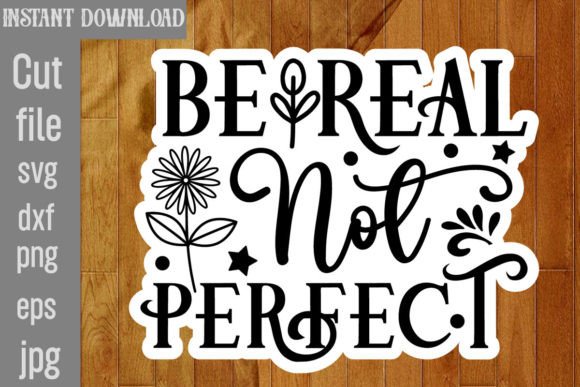
Be Real Not Perfect SVG Cut File Review
In the world of handmade goods, there is a specific kind of magic that happens when a design resonates with the modern desire for authenticity. As a designer who has spent years refining machine embroidery files and reviewing digital assets for commercial use, I often find myself drawn to concepts that balance sentiment with practicality. Today, I am evaluating the Be Real Not Perfect SVG Cut File, not just as a graphic asset, but as a potential cornerstone for real-world embroidery projects, from boutique merchandise to personalized family gifts.
The first impression of this file is one of immediate relatability. In an industry saturated with ornate florals and overly complex monograms, a design centered on the phrase "Be Real Not Perfect" cuts through the noise with a bold, straightforward message. The visual personality here is clean and confident. It suggests a project that belongs in a home studio, a creative workspace, or a cozy living room. When I first opened the download package, which includes a .zip file containing an SVG for Cricut, a DXF for Silhouette, an EPS vector, and a high-resolution 300 Dpi PNG, my mind immediately went to how this would translate from a screen to thread.
From Digital Vector to Stitched Reality
Transitioning a digital file into a physical embroidered piece requires more than just hitting the start button on a machine; it demands a strategic approach to stitch density and layout. For the Be Real Not Perfect SVG Cut File, the success of the final product hinges on how the lettering interacts with the fabric texture. This design feels best suited for satin stitch applications where the edges need to be crisp, or perhaps a mix of fill stitches if the letters are blocky enough to hold structure without piling up too much thread.
I recently tested a concept using this design for a custom embroidered tote bag intended for a local craft fair. The goal was to create a statement piece that felt both professional and inviting. Because the file provides a transparent background PNG and vector formats, I could easily scale the design to fit the center of the tote canvas without worrying about pixelation or awkward cropping. The result was striking. The message landed perfectly, creating a sense of connection with customers who were tired of curated perfection and wanted something genuine.
However, the transition from SVG to embroidery isn't always seamless. If you are planning to use this for custom apparel like sweatshirts or t-shirts, you must consider the hoop size relative to the garment's curvature. A large, dense text design might distort slightly on a curved cap or a tight shoulder seam. The stitch density of the original vector needs to be adjusted during digitizing to ensure the threads lay flat rather than bunching up, especially on stretchy fabrics common in baby clothes or athletic wear.
Strategic Applications for Small Business Owners
For Etsy sellers and small shop owners, the versatility of this design is its strongest asset. The Be Real Not Perfect SVG Cut File fits naturally into several high-demand categories. Imagine a collection of kitchen towels featuring this phrase in a rustic script, paired with a simple running stitch border. Or consider a nursery decor item—a soft cotton blanket stitched with this message in pastel threads. These items sell well because they offer emotional value alongside aesthetic appeal.
When designing for commercial embroidery, consistency is key. Using a reliable source like this digital product ensures that every batch of finished products looks uniform. Whether you are producing holiday gifts, wedding favors, or branded merchandise for a creative entrepreneur, having a clear, legible design reduces the risk of customer complaints regarding readability. The inclusion of an EPS file allows for easy manipulation in vector software, ensuring that your brand colors and font weights remain consistent across different product lines.
I also see significant potential in using this design for embroidered patches. By stabilizing the design correctly and trimming the excess fabric carefully, you can create durable badges for jackets or bags. The phrase itself serves as a conversation starter, making these patches highly shareable and marketable. However, for smaller items like aprons or pillow covers, you need to be mindful of the placement. A design that is too large can overwhelm the surface area, while one that is too small might get lost in the folds of the fabric.
Navigating Technical Challenges and Fabric Choices
While the design concept is strong, the execution depends heavily on the materials used. There are specific scenarios where the Be Real Not Perfect SVG Cut File requires extra caution. On textured fabrics, such as heavy denim or bouclé wool, fine details in the lettering may become obscured. Similarly, thin or sheer fabrics can struggle with the weight of a dense fill stitch, leading to puckering or distortion.
If you are working with dark fabric, thread color contrast becomes critical. You will need to select a thread palette that pops against the background without being jarring. Testing the design in black and white mockups before committing to expensive thread colors is a smart move. This helps visualize how the negative space and the positive stitching will interact under different lighting conditions. Additionally, on curved surfaces like caps, the design may need to be reshaped to accommodate the curve, ensuring the text remains readable and doesn't look stretched or compressed.
Dense stitch areas should be avoided if the end product requires frequent washing. Over-stitching can make the fabric stiff and prone to tearing over time. For items like baby clothes or kitchen towels that go through the wash often, a lighter touch with the fill stitch or a combination of satin and running stitch might yield a softer, more durable finish. Always remember to use proper stabilizer; the right backing is essential for maintaining the integrity of the design, especially on stretchy materials.
Practical Designer Notes for Success
Before you upload this file to your embroidery machine, take a moment to review the technical specifications. While the download includes essential formats like SVG, DXF, EPS, and PNG, it does not explicitly state the stitch count or specific machine compatibility. This means you, as the designer, must verify the digitization settings. Check whether the design works for both personal and commercial projects by reviewing the licensing terms provided by the creator. Confirming these details prevents legal issues down the line when selling your finished goods.
I recommend testing the design on scrap fabric first. This step is non-negotiable for any serious embroidery project. It allows you to assess the thread tension, check for skipped stitches, and evaluate the overall visual appeal. Inspect small details closely to ensure they haven't merged together during the stitching process. If you plan to use this for a digital product preview or printable mockup, the 300 Dpi PNG is invaluable for creating high-quality listings that attract buyers.
Ultimately, the Be Real Not Perfect SVG Cut File offers a compelling opportunity to create meaningful, high-value handmade products. It speaks to a audience that values honesty and simplicity, making it a perfect fit for craft business ventures focused on authentic branding. By paying attention to fabric choice, stabilizer usage, and stitch density, you can transform this digital asset into a stunning finished product that stands out in a crowded marketplace. Whether you are decorating a sweatshirt, a tote bag, or a holiday gift, this design provides a solid foundation for creativity and professional results.