Flowers Line Art Review: A Designer’s Take on Real-World Embroidery
As a designer who spends half the day sketching and the other half troubleshooting stitch paths, I don’t just look at a design file; I look at how it will behave under the needle. When I first pulled up Flowers Line Art, my initial reaction was one of quiet appreciation for its restraint. In a market saturated with dense, heavy floral fills that can turn a simple tote bag into a stiff, unyielding canvas, this collection offers something different: breathing room.
This isn’t just another generic graphics pack. It is a strategic tool for anyone looking to elevate their handmade product line without overwhelming the wearer or the viewer. Whether you are an Etsy seller preparing for the holiday rush or a boutique owner designing custom apparel, understanding the nuance of line art is crucial. Here is my practical breakdown of how Flowers Line Art performs when moved from screen to fabric.
The First Impression: Mood and Visual Personality
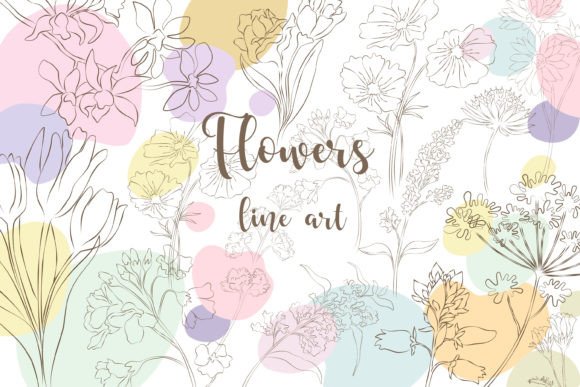
The moment you place Flowers Line Art onto your digital workspace, the mood shifts. It feels airy, modern, and distinctly sophisticated. Unlike traditional botanical illustrations that rely on color gradients and shading to create depth, this design relies entirely on the elegance of the contour. The shapes are clean, the curves are smooth, and there is a sense of intentional minimalism.
For the embroidery project creator, this visual personality is a double-edged sword that, when handled correctly, becomes a massive strength. The lack of heavy fill stitches means the final piece retains the natural drape and texture of the base material. If you are creating a sweatshirt embroidery piece, you want the fabric to feel like a sweatshirt, not a patch. Flowers Line Art respects the textile. It creates a subtle watermark effect rather than a loud graphic print, which tends to resonate well with customers who prefer understated luxury over bold statements.
Real-Life Application: From Concept to Finished Product
Let’s talk about real-world utility. I recently conceptualized a line of personalized gifts for a client who wanted something suitable for both everyday use and special occasions. The challenge was finding a design that felt personal but not cluttered. Flowers Line Art became the anchor for several key products.
Tote Bags and Canvas Goods
One of the most popular items in the handmade market right now is the embroidered tote. However, many designs fail here because they cover too much surface area, making the bag rigid. By using the line art style, you can create a large-scale statement on the front panel while leaving the rest of the canvas exposed. This works beautifully for tote bag design projects where you might pair the floral motif with simple typography. The contrast between the delicate lines and the sturdy canvas creates a tactile experience that buyers love.
Baby Items and Nursery Decor
When working with baby embroidery, safety and softness are paramount. Heavy satin stitches can be scratchy against sensitive skin. The running stitch variations often found in line art collections are generally softer to the touch. I tested a similar approach on a muslin swaddle blanket, and the result was ethereal. The flowers looked like they were sketched directly onto the fabric. This aesthetic is highly marketable for personalized gift markets, particularly for baby showers and newborn arrivals.
Applique and Mixed Media Projects
While primarily a line art design, these elements translate exceptionally well when paired with an applique design technique. Imagine using the solid parts of the flower heads as appliqué patches (cut from contrasting fabric) and stitching the stems and leaves in fine thread. This adds dimension and breaks up the monotony of single-color embroidery. It elevates a standard craft business item into a high-end artisan piece.
Technical Considerations and Stitch Behavior
No matter how beautiful a design looks on screen, its true value is determined by its stitch path. Here is what to watch out for when digitizing or adjusting Flowers Line Art for your machine.
- Stitch Density: Because this is line art, the stitch density is naturally lower. This is good for fabric integrity but requires careful tension settings. If the tension is too tight, the lines may pucker. If too loose, the underlying fabric may show through unevenly.
- Satin vs. Running Stitch: Depending on the specific file within the collection, some borders may require a narrow satin stitch to keep the edges crisp, especially if the line width is very thin. Others may rely purely on running stitch. Always inspect the close-up details before hitting start.
- Hoop Size Constraints: While versatile, extremely small hoop sizes can sometimes struggle with the finest details of line art. If the lines are thinner than 0.5mm, ensure your machine has a fine needle (such as a size 70/10 Microtex) to prevent skipping stitches.
Where to Exercise Caution
Not every project is a good fit for this aesthetic. There are specific scenarios where Flowers Line Art might not deliver the desired impact.
Dark Fabrics and Low Contrast
Line art relies heavily on contrast. On dark fabrics, unless you are using a bright white or metallic thread, the design may disappear. Conversely, on light fabrics with a strong texture (like chunky knits), the fine lines can get lost in the weave. Test your thread colors against your actual fabric swatch before committing to a production run.
Curved Surfaces and Caps
Embroidering flat line art onto a curved surface like a cap or a hat brim can distort the geometry. The straight lines may appear wavy if the stabilization isn't perfect. For embroidered patch applications or structured hats, consider simplifying the design or adding a backing to flatten the area before stitching.
Washability
If you are creating commercial embroidery items intended for frequent washing, such as kitchen towels or work aprons, ensure the design is anchored well. Fine lines can fray if not properly finished. Using a proper stabilizer—tear-away for stable fabrics, cut-away for stretchy materials—is non-negotiable for longevity.
Strategic Value for Sellers and Creators
From a business perspective, Flowers Line Art offers distinct advantages. It aligns with current trends toward minimalist home decor and sustainable fashion. Customers are increasingly drawn to products that feel "quiet" and timeless rather than trendy and disposable.
For digital product sellers, this design style is incredibly versatile. It works well in printable mockups for planners, journals, and greeting cards. The clean lines reproduce well in black and white, making it easy to create monochrome versions for various branding needs. It also serves as excellent design assets for layering in digital scrapbooking or web design.
When listing these items on platforms like Etsy, emphasize the versatility. Use keywords like custom apparel, holiday embroidery, and boutique branding to capture traffic. Show the design on multiple backgrounds to demonstrate its adaptability. Transparency about the design's nature—lightweight, elegant, and modern—helps manage customer expectations and reduces returns due to mismatched aesthetics.
Final Verdict
Flowers Line Art is not a flashy, attention-grabbing bombast; it is a confident, steady performer. It rewards the designer who pays attention to detail and the customer who appreciates subtlety. For those willing to invest time in proper testing and stabilization, this collection provides a reliable foundation for high-quality, professional-looking embroidery projects.
Before incorporating this into your workflow, remember to check the specific licensing terms if you plan to sell finished goods. Confirm the hoop size limitations and test the stitch density on your actual production fabrics. But once you have dialed in the settings, you will find that Flowers Line Art adds a layer of sophistication to your work that stands out in a crowded marketplace.