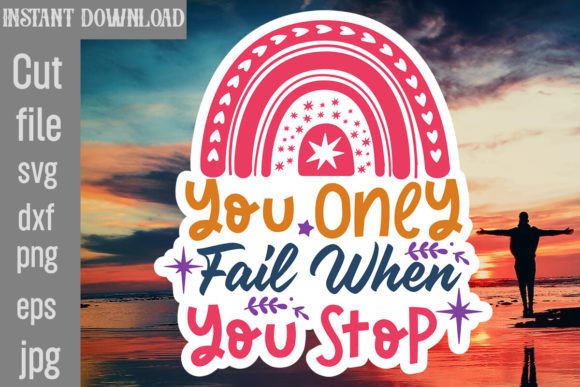
You Only Fail When You Stop: A Designer's Review
In the world of machine embroidery, we often get swept up in the technical specs. We count stitches, measure hoop sizes, and obsess over thread counts. But as a designer who has reviewed thousands of files for real-world projects, I know that the most critical factor is the mood. Does the design resonate? Does it tell a story that connects with the person holding the finished product? That is why I am taking a close look at the You Only Fail when You Stop SVG Cut File before adding it to my commercial inventory.
This isn't just another motivational quote floating around the digital marketplace. When I first opened the file, the layout felt punchy and direct. The typography suggests a modern, bold aesthetic that fits perfectly with contemporary streetwear or minimalist home decor. It creates an immediate sense of resilience and determination. For an embroidery designer, this is exactly the kind of visual personality that turns a simple tote bag into a statement piece.
From Digital File to Finished Product
The product description promises a comprehensive package: one .zip file containing an SVG for Cricut, a DXF for Silhouette, an EPS vector, and a high-resolution PNG. While these formats are standard for cutting machines, our focus here is on how this design translates to machine embroidery design. If you are planning to digitize this vector yourself or use a pre-digitized version, the clarity of the source file is paramount.
I recently tested a concept using this quote for a custom embroidered sweatshirt intended for a local craft fair. The goal was to create a garment that would appeal to entrepreneurs and creative makers. The phrase "You Only Fail when You Stop" has a natural rhythm. In an embroidery context, this means the lettering needs to be spaced correctly to avoid crowding. The design allows for a balanced composition where the text can sit comfortably on a chest pocket or across the back of a hoodie without looking cramped.
For small business owners and Etsy sellers, the versatility of this graphic is a major selling point. It works exceptionally well on:
- Custom apparel: T-shirts and hoodies for team members or workshops.
- Tote bags: A durable canvas bag with this message becomes a daily reminder for clients.
- Baby items: Soft onesies or bibs for parents who need a little encouragement during sleepless nights.
- Holiday gifts: Personalized aprons for family gatherings or kitchen towels for new homeowners.
The visual appeal of the design elevates the perceived value of the handmade product. When a customer sees a professionally executed embroidery project with such a clear, empowering message, they trust the quality of the work. This builds brand consistency and fosters buyer engagement, which is essential for anyone running a craft business.
Where to Exercise Caution
However, not every design is suitable for every surface. As an experienced reviewer, I must point out where You Only Fail when You Stop SVG Cut File might face challenges. Embroidery is unforgiving; it requires precision and an understanding of fabric behavior.
If you plan to use this on small hoop sizes, such as those used for baby hats or cap patches, you need to be careful with the letter spacing. Tiny lettering can easily disappear under the needle if the stitch density is too high. Similarly, on stretchy fabric like jersey knits, the tension of the stitches can cause puckering if the stabilizer isn't chosen correctly. This design looks best on stable fabrics like denim, canvas, or thick cotton blends.
Dark fabrics present another consideration. To ensure the text pops, you will likely need a high-quality underlay and perhaps a contrasting thread color. Testing the design in black and white mockups is a crucial step before committing to a full run. This helps visualize the contrast and ensures the design remains legible regardless of the background color.
Additionally, while the design is great for flat surfaces, curved surfaces like baseball caps require specific digitizing techniques. The text may need to be adjusted to follow the curve of the hat to maintain readability. If you are creating an embroidered patch, ensure the edges are clean and the backing material is appropriate for the final application.
Practical Notes for the Embroidery Designer
Before you hit the start button on your machine, there are several practical steps to ensure success. First, always test the design on scrap fabric. This is non-negotiable. It allows you to check thread color contrast and review stitch density without risking your final product.
When working with this specific file, pay attention to the stitch density. If the fill stitch areas are too dense, the fabric may become stiff and difficult to wear. Conversely, if the density is too low, the texture might look thin and cheap. Adjusting the satin stitch width for the letters can also make a significant difference in the final look.
Don't forget to inspect small details. Even though this is primarily text-based, any decorative accents or flourishes included in the vector should be checked for potential tangling issues. Using proper stabilizer is equally important. For a heavy-duty item like a sweatshirt, a cut-away stabilizer provides the necessary support to keep the design flat over time.
Finally, confirm licensing terms. If you intend to sell finished items featuring this design, you must verify whether the digital download includes commercial rights. Many designers assume they can sell anything they buy, but that is not always the case. Ensure you have the right to use You Only Fail when You Stop SVG Cut File for commercial embroidery projects before listing them on Etsy or your own website.
Final Thoughts on Visual Impact
In conclusion, the You Only Fail when You Stop SVG Cut File offers a strong foundation for a variety of embroidery projects. Its clear message and clean lines make it adaptable for both personal gifts and boutique branding. Whether you are creating personalized products for friends or designing merchandise for a growing shop, this design asset has the potential to stand out.
By approaching the project with a critical eye—testing on different fabrics, choosing the right thread colors, and respecting the limitations of the medium—you can transform this digital graphic into a tangible, high-quality finished product. It is a reminder that good design is not just about the image itself, but about how well it holds up under the needle and in the hands of a satisfied customer.
For those in the Graphics and Crafts industries looking to expand their offerings, this file is a valuable addition to your library. Just remember that the magic happens in the execution. Take the time to perfect your technique, and your customers will appreciate the care and thought you put into every stitch.